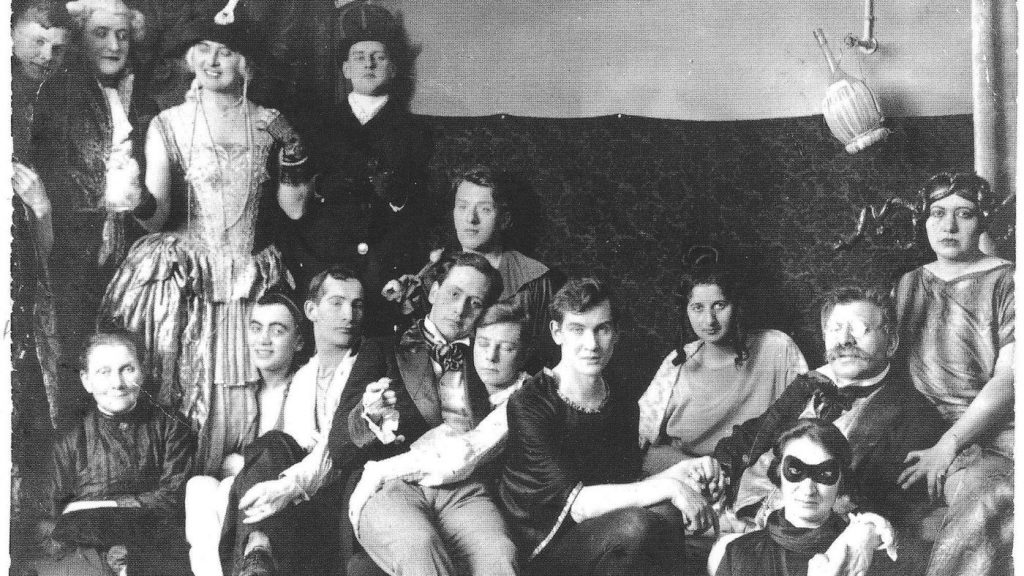
No, the radical LGBTQIA+ movement and LGBTQIA+ activism did not originate on June 28, 1969, in Greenwich Village during the Stonewall riots. The impact of the Stonewall riots on queer activism to this day is absolutely undeniable. But before that, there was already an activist LGBTQIA+ movement that is often overlooked. In Germany, during the second half of the 19th century and the early 20th century, a radical queer movement emerged that is frequently forgotten.
And although this movement did not achieve many victories during that time, it would play a crucial role and accomplish significant work. It is upon their legacy and their achievements that the militant LGBTQIA+ movement of the late 1960s and early 1970s was built.
But this movement was brought to a halt and nearly obliterated by fascism during the 1930s and 1940s. Many of the activists involved would perish in Nazi torture chambers or concentration camps. And their legacy was forgotten for a long time.
Karl Heinrich Ulrichs
Between the early 1860s and the late 1870s, Karl Heinrich Ulrichs was the first person to publicly recognize LGBTQIA+ people as an oppressed minority and argued that activism against the discrimination LGBTQIA+ people face on a daily basis was necessary.
He was convinced of the need for clear terminology to discuss LGBTQIA+ people and topics rather than vague descriptions. He also wrote about what he described as the “third gender,” something we now call non-binary or genderqueer.
Ulrichs was one of the first writers to acknowledge the existence of female homosexuality, which was considered highly controversial at the time, even among so-called specialists.
At the time, Ulrichs traveled throughout Europe to organize clandestine meetings to discuss LGBTQIA+phobia and how to fight oppression in an effort to mobilize people to take action themselves, as his primary focus remained on activism. He is believed to have organized one or more of these meetings in Belgium (likely Brussels) and spoken there.
But despite his efforts to mobilize and the many clandestine meetings he organized throughout Europe, Ulrichs was never able to build a real movement.
Ulrichs may be forgotten today, but he was in fact the founder of the modern LGBTQIA+ movement. He was a direct influence on Magnus Hirschfeld.
Paragraph 175
Magnus Hirschfeld began his activism against the backdrop of increasing persecution of LGBTQIA+ people in Germany. After German unification in 1871, the laws known as “Paragraph 175” and “Paragraph 175b” were introduced.
These laws prohibited homosexuality and homosexual sex work, but they also explicitly prohibited people from being transgender or gender non-conforming. Although homosexuality between cisgender women was not strictly prohibited under these laws, “Paragraph 175” was also used to persecute and imprison lesbian women.
Similar laws had existed prior to 1871, but these new laws were the result of the emergence of the new German Empire and, in many respects, were stricter.
According to the German government, the increasing number of LGBTQIA+ people arrested in Germany was the direct result and fault of the corrupting influence of French culture, for, as they claimed, “before the Franco-Prussian War, there were no homosexuals in the German Empire.”
Starting in 1880, there was even a police unit in Berlin dedicated solely to arresting LGBTQIA+ people, officially called “the homosexuals’ division.” They were among the first to use the word “homosexual.”
That police force began using mug shots to make it easier to recognize previously arrested LGBTQIA+ people on the street in order to track them and lure them into a trap.
Many working-class people were driven into sex work as a direct result of their daily living conditions and the economic situation.
Hirschfeld and the Institute for Sexology
Although Magnus Hirschfeld was himself homosexual, it was primarily during his early experiences as a physician and psychologist in the early 1890s—when many of his first patients were already LGBTQIA+ people—that he began to understand the broader context of the legal and social discrimination faced by LGBTQIA+ people.
In 1897, he formed the Scientific-Humanitarian Committee (Wissenschaftlich-humanitäres Komitee or WHK) to advocate for the legal reform of Paragraph 175. Their motto was “Through science to justice,” which clearly reflects Hirschfeld’s approach to LGBTQIA+ issues.
The main goals of the WHK were activism, conducting scientific research, and providing public education, but these goals were not separate from one another. These actions were interconnected.
Although his early articles focused exclusively on gay and lesbian people, he soon began to pay more attention to transgender and gender-nonconforming people. In his groundbreaking book *Die Transvestiten*, he nuanced Ulrichs’ idea of the existence of a so-called “discrete third gender.” Hirschfeld was convinced that the theory of a third gender was too limited; rather, he believed that gender was a spectrum and that multiple (or many) gender identities exist. Furthermore, he was convinced that gender is not as rigid as was (and still often is) assumed, but that there is so much diversity that we must embrace it. Hirschfeld also distinguished between biological sex and gender.
Language and terminology have evolved since then. When Hirschfeld used the term “transvestites,” he was usually referring to trans* people.
And he would distinguish between sexual orientation and gender identity. Many of these concepts may sound quite plausible today, but when Hirschfeld published them between 1897 and 1914, these ideas were considered radical, groundbreaking, and shocking, and they certainly made him even more of an enemy to conservative sexologists, sociologists, psychologists, and the government than he already was.
In 1919, together with other psychologists, doctors, and activists in Berlin, he founded the “Institut für Sexualwissenschaft” (Institute for Sexual Science), which would provide medical and psychological counseling on a range of sexual issues, primarily but not exclusively for LGBTQIA+ people. Another key goal of the institute was clear and detailed scientific research.
There was an archive, library, and museum to educate people about LGBTQIA+ topics. More than 3,500 people visited the museum annually, a museum that would be visited by people from all over the world. Conferences were organized, such as his international congress on homosexuality (or rather, on LGBTQIA+ topics in general).
But the work at the institute and the lectures that Hirschfeld and his colleagues organized in other German cities were regularly disrupted by violence from the SA, the Freikorps, or other far-right groups.
Hirschfeld also provided long-term shelter at his institute to many transgender and non-binary people due to the daily discrimination, violence, and oppression they faced. For them, the institute was a safe space where they found a sense of security within its walls that they could not find anywhere else.
The institute issued so-called “transvestite passes” (transvestitenschein) to transgender and gender non-conforming people. By having these passes they were recognised as patients of the institute. This was an effort to protect them from police violence.
In 1919, the institute released “Different from the Others,” the first film about homosexuality.
Between 1898 and 1914, the publishing house that released Hirschfeld’s books, Spohr Verlag, would publish more than 100 pamphlets and books on LGBTQIA+ themes by various authors in defense of LGBTQIA+ people.
Hirschfeld was certainly not the only one conducting research on this subject, but he would be a direct inspiration to nearly everyone.
Although Hirschfeld played a crucial role in this movement, it is important to understand that his achievements were never individual accomplishments but the collective result of his institute, the WHK, and a whole host of activists and queer people, most of whose names have unfortunately been lost to history.
Although the German pre-war queer movement remained relatively small, an LGBTQIA+ movement had indeed emerged that would influence multiple countries. And so we can consider this the very first true LGBTQIA+ movement. This was a movement that utilized scientific research, education, street activism, its own magazines, newspapers, and a literary movement. To a certain extent, there was support from the socialist, anarchist, and feminist movements. There was also support from international organizations and organizations directly inspired by queer activism in Germany. Ties were forged with the Bolsheviks in the Soviet Union (until LGBTQIA+ people were once again persecuted with the advent of Stalinism).
LGBTQIA+ Activism and Solidarity
In 1898, Hirschfeld won the support of August Bebel, who was a member of the German Social Democratic Party. Bebel would speak out in favor of abolishing Paragraph 175.
Another early sympathizer of the WHK was Karl Kautsky. And in 1919, Bebel and Karl Kautsky would sign the petition initiated by Hirschfeld to repeal Paragraph 175. This petition was also signed by Hermann Hesse, Thomas Mann, Stefan Zweig, Rainer Maria Rilke,…
Hirschfeld and his institute established a connection and collaboration with the Soviet Union following the Russian Revolution, and the Soviet Union would go on to establish its own institute, modeled after Hirschfeld’s.
Link with the feminist movement
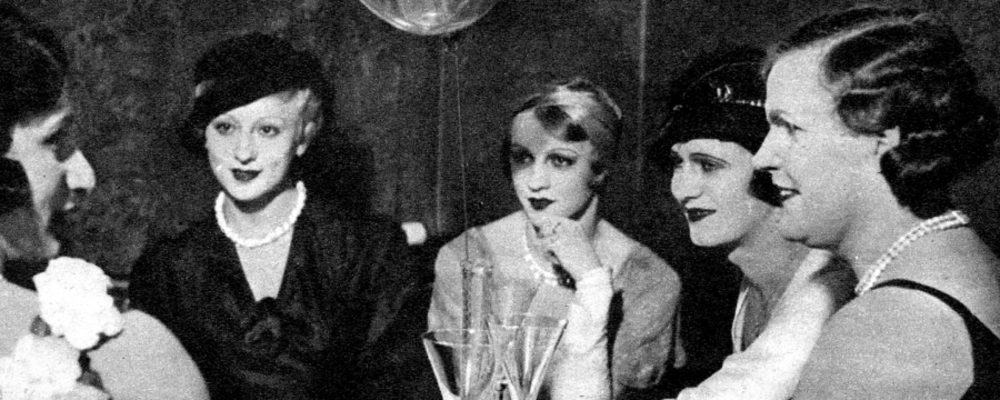
Theodora Anna Sprüngli (also known as Anna Rüling) is regarded as the first lesbian activist.
In 1904, she was the first to raise the issue of lesbian emancipation within the feminist movement and to advocate within the feminist movement for a link between the feminist movement and the queer movement. Although many lesbian women were active within the feminist movement, this was received as a shock. She would raise this issue during the meetings of the WHK.
Through his activism and publications, Magnus Hirschfeld had ties to Clara Zetkin and Alexandra Kollontai. With Zetkin, he discussed the connection between the feminist movement and the movement for the emancipation of LGBTQIA+ people, and he agreed on the need for a socialist character to this movement. Hirschfeld was a socialist, even though he would never officially join a party.
Hirschfeld understood the need to build strong solidarity between the LGBTQIA+ movement and the feminist struggle, which is why, in addition to discussing this with Zetkin, he would also forge close ties with Helene Stöcker, who was a co-founder of the League for the Protection of Mothers and Sexual Reform (Bund für mutterschutz und sexuelle Reform), a feminist organization that would fight for women’s rights in general, but with the struggle for the legalization of abortion as its primary focus.
The Masculinists
Another LGBTQIA+ movement in Germany at the time was the so-called “masculinists,” a group of macho men who idealized the myths surrounding ancient Greek homosexuality—a group that has now rightly fallen into obscurity because they were anti-Semitic, sexist, transphobic, and nationalist. They were self-proclaimed enemies of Hirschfeld and his ideas. Unfortunately, they wielded considerable influence. This group would later join the Nazis.
Persecution under Nazism
The Nazis called Hirschfeld “the most dangerous German.” At that time, homosexuality was mockingly referred to as “German love” or “the German disease” as a direct result of the work of Magnus Hirschfeld and his institute.
Soon after the Nazis came to power in 1933, they began banning books they considered “un-German,” including the entire body of work by Magnus Hirschfeld and all books on LGBTQIA+ topics. Hirschfeld’s books were even among the first to be banned.
On May 6, 1933, the Nazis destroyed the entire institute…. And turned it into a public spectacle. They brought along a brass band that played cheerful melodies, and the crowd watching (about 200 people) could buy drinks and snacks while it happened.
This marked the beginning of a far more horrific phase in the Nazis’ persecution of LGBTQIA+ people, and from that point on, many LGBTQIA+ people would be deported to concentration camps.
The destruction of the institute and the persecution of its staff came as no surprise at all, but it happened much faster than anyone had expected. As a result, the institute’s entire library and research archive were lost—the life’s work of Hirschfeld and many others.
Hirschfeld would die a few months later in exile in France. At the time of the destruction, he was outside Germany on a world tour to speak out and warn of the dangers of fascism and the need to build a movement. But many of his staff members would die in Nazi torture chambers or concentration camps.
But it wasn’t just Hirschfeld’s institute and the WHK that were targets of Nazi LGBTQIA+phobic persecution. A month after the institute’s destruction, the Nazis arrested many other LGBTQIA+ activists, politicians, and militants who had openly supported the LGBTQIA+ movement and sent them to concentration camps.
Another example is the Eldorado club, a famous LGBTQIA+ club in Berlin, which was destroyed by the Gestapo and later used by the NSDAP’s propaganda department as a clear statement against LGBTQIA+ people.
Until 1934, the persecution of LGBTQIA+ people was a matter for the police. From that point on, the Gestapo formed a new unit, “Special Bureau II S,” which would focus solely on the persecution of LGBTQIA+ people and those who had undergone an abortion. And they changed the law so that evidence was no longer required from that point on.
More than 160,000 gay men and transgender people were sent to concentration camps and prisons. And those who survived were still persecuted by the German government. Unfortunately, there are no reliable figures on the number of lesbian women sent to concentration camps.
Until 1937, they wore the red triangle (“asocial elements”); thereafter, they wore the pink triangle; and starting in 1938, the pink triangle was made three times larger than the other triangles to clearly mark LGBTQIA+ people.
Between 1933 and 1945, LGBTQIA+ people played a role in the resistance against fascism in Germany. In Strasbourg, there was a resistance organization consisting exclusively of LGBTQIA+ youth.
The fate of LGBTQIA+ people in Germany during the Nazi era has always been excluded from history. It took about 70 years before they were officially recognized as victims. As we have seen, the movement that LGBTQIA+ activists built up in Germany between 1860 and 1933 was much smaller than the movement would become in the early 1970s, or in the 1980s, or as it is today. We must not forget that the circumstances in which they did everything they could to build a movement were extremely complex and dangerous. But even though that movement was not a mass movement, we must not forget the impressive and important work they were able to accomplish under those circumstances.
Nor should we forget the necessity of organizing ourselves and the importance of the struggle against the far right. In a society where the popularity of the far right is on the rise, attacks on LGBTQIA+ rights will only intensify, and the questioning of queer issues will only grow in intensity. Only by organizing and fighting can real progress be achieved. By failing to actively fight against LGBTQIA+phobia, LGBTQIA+phobia and daily violence will only increase. The fight against LGBTQIA+phobia must be linked to the fight against sexism, racism, and all movements against all forms of oppression.