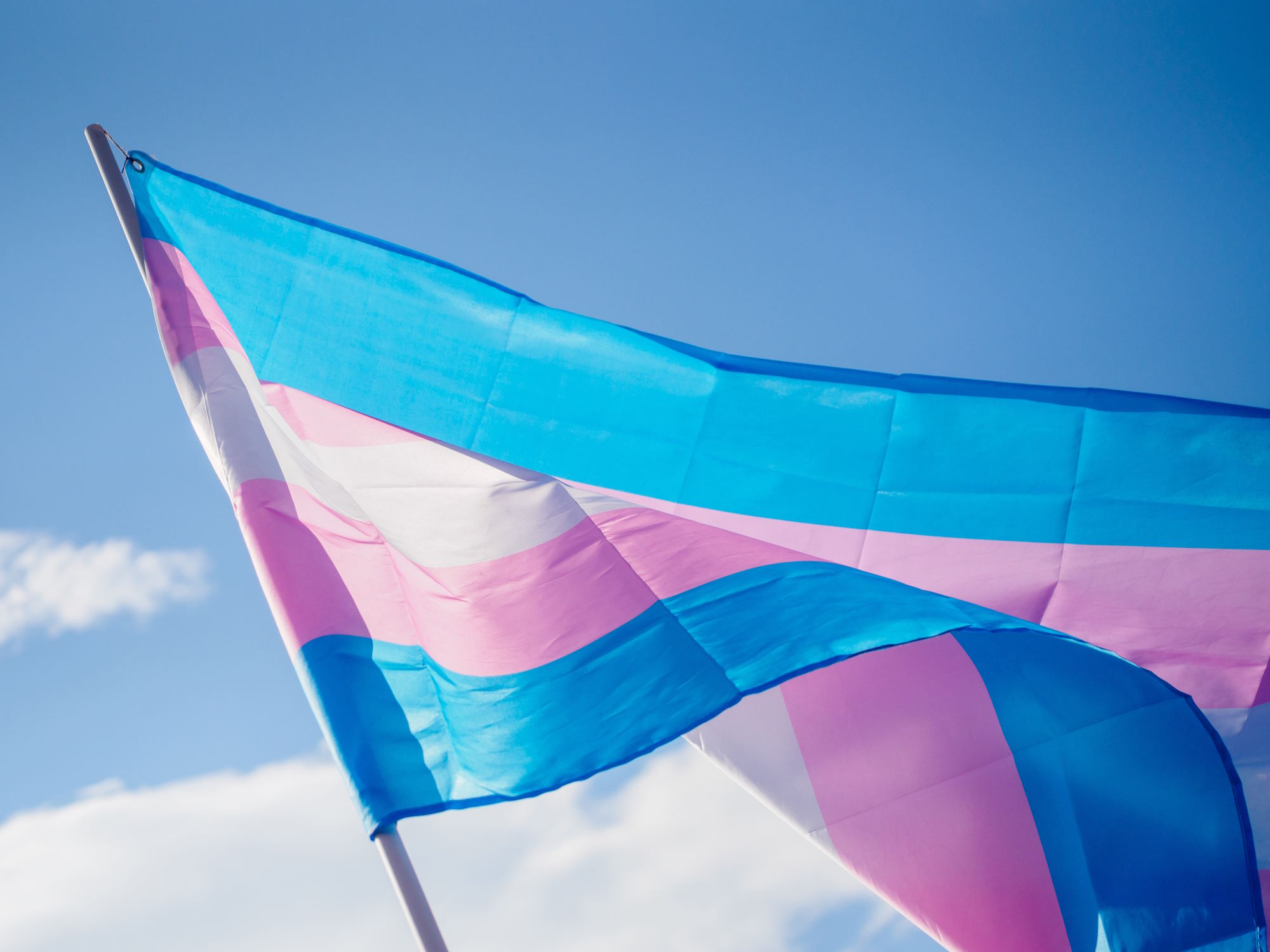
A response to conservative propaganda.
Originally published on the ROSA Campaign website on 16 April 2024.
The right and far right are waging a hate campaign against anyone who resists oppression, and in particular against trans people. They are portrayed as the result of extreme woke-ism. This is nonsense. A look at the development of rigid gender norms refutes conservative propaganda.
“Simplistic and rigid gender norms are not eternal or natural. They are changing social concepts. Many people today would be surprised to learn that ancient societies held transgender people in high esteem. It took a bloody campaign by the emerging ruling class to declare what was considered natural to be the opposite. That prejudice, imposed on society by the ruling elite, still exists today.”
This is what Leslie Feinberg writes in the introduction to the pamphlet Transgender Liberation, A movement whose time has come. That text is now more than 30 years old, but its content remains highly innovative and urgent. Today, contact with the history and tradition of trans people has been lost. Many people have no idea that trans people have always existed. That should come as no surprise: trans people have literally been written out of history.
Our capitalist society places a great deal of emphasis on the binarity of gender. Whether you are ordering something online, obtaining your driving licence, or subscribing to a magazine, you must indicate M/F, and with any luck, there is now also an option for “other”.
Why do all these institutions need to know whether you are a man or a woman? And where does this emphasis on gender come from? To find answers, we have to go back to the origins of class society.
The emergence of class society
Before people started farming around 12,000 years ago, they lived in nomadic tribes that gathered food and hunted. In such a group, everyone’s work was needed and no more could be gathered or made than was necessary.
If we reduce the entire history of humankind to the scale of a single year, we lived 360 days in these kinds of matrilineal societies based on common ownership. Tolerance and respect for human variation, including sex and gender diversity, stemmed from the fact that people worked together with tools and other materials that were commonly owned.
That tolerance disappeared when humans became sedentary, took up agriculture and a class society emerged. Below is an example of how that happened.
The Hebrews (precursors of the Jews) are such a nomadic group. At a certain point, they migrate to the Fertile Crescent. To do so, they must constantly wage war, as it is a highly sought-after area. It is fertile soil, easy to farm, and located at a trade crossroads between Europe, Africa and Asia. The combination of war, agriculture and trade meant that a small group of people in that society could appropriate a surplus, weapons and wealth for themselves and thus oppress others. The laws that the elite wanted to impose were laid down in the book of Deuteronomy (5th book of the Torah, 2nd book of the Bible), among others. One of the aims of these laws was to clearly establish the difference between men and women and to oppress women. The men, who had become the elite, wanted to know exactly which children were theirs, so that they could pass on their possessions within the family line. Some of these laws read as follows: ‘A woman must not wear men’s clothing, nor a man wear women’s clothing, for the Lord your God detests anyone who does this’ and ‘No one who has been emasculated by crushing or cutting may enter the assembly of the Lord.’. Cross-dressing and gender confirmation surgery were therefore existing practices, otherwise the upper echelons of society would not have felt the need to enshrine this prohibition so clearly in the laws. The requirement for men to have short hair and women to have long hair was also established by the elite. The oppression of trans people therefore has the same origins as the oppression of women. Throughout human history, various ruling elites (nobility, bourgeoisie, etc.) have continued this oppression. Sowing division was (and is) necessary for them to remain in power.
Joan of Arc
Although repression was very harsh, transgender people and the tradition of cross-dressing remained present in societies and in the traditions of farmers who still lived partly on a communal basis. This was also the case in medieval France. The best-known example of this is undoubtedly Joan of Arc, who is often portrayed today as a young girl who dreamed, saved France and ultimately ended up at the stake on suspicion of witchcraft. The reality is different.
Joan of Arc played an important role in the Hundred Years’ War (war for the French crown between England and France between 1337 and 1453). She led an army of peasants, succeeded in liberating Orléans and helped the French heir to the throne reach Reims, where he could be crowned. She did so in armour intended for men. This attire is sometimes explained by its practicality, as it would be easier to go into battle in male clothing. Peasant uprisings in which peasants dress as women and address each other as “sister” contradict this (e.g. Rebecca and her Daughters in Wales, 1839).
In 1430, Joan of Arc was captured by the Burgundians, allies of England. She was handed over to the Inquisition (the court of the Catholic Church at the time). In her cell, she repeatedly refused to wear women’s clothing. France did nothing to save their hero, who had restored the “rightful heir” to the throne. Why? Joan of Arc was revered by the peasants in the rural community where she came from. People wanted to touch her constantly. This posed a threat to the French ruling elite. Joan of Arc’s cross-dressing was central to this veneration. It was not witchcraft but her cross-dressing that led to her being burned at the stake. However, the tradition of the peasants could not be completely nipped in the bud. The Church admitted that the farmers considered her the greatest of all saints after Mary. After her death, her armour was displayed and venerated in the church of Saint-Denis.
Trans people have always existed
Joan of Arc, Rebecca and her daughters (Wales), Mère Folle et ses enfants (Dijon, Langres and Chalon-sur-Saône), Mère Sotte et ses enfants (Paris, Compiègne), Mère d’Enfance (Bordeaux), Lords of Misrule (England, Scotland)… are all examples that show that trans people have always existed in societies with different religions, that they had a certain prestige and that they led uprisings and even wars. It is a good argument against anyone who claims that trans people are the product of a woke generation that has lost its way.
It also makes it clear how w settler colonists in America so quickly recognised the two-spirited people from indigenous populations and why extreme repression was used against them.
It is necessary to understand the oppression of trans people at its roots in order to best combat it. That means we must do away with class society and private ownership of the means of production. Trans activist Leslie Feinberg concludes: ‘The fact that, on a scale of one year, more than 360 days of human history belong to cooperative, communal living gives me concrete hope about what could be achieved with the powerful tools and technology that exist today, if we plan all production to meet the needs of everyone, without having to take the issue of profitability into account.’